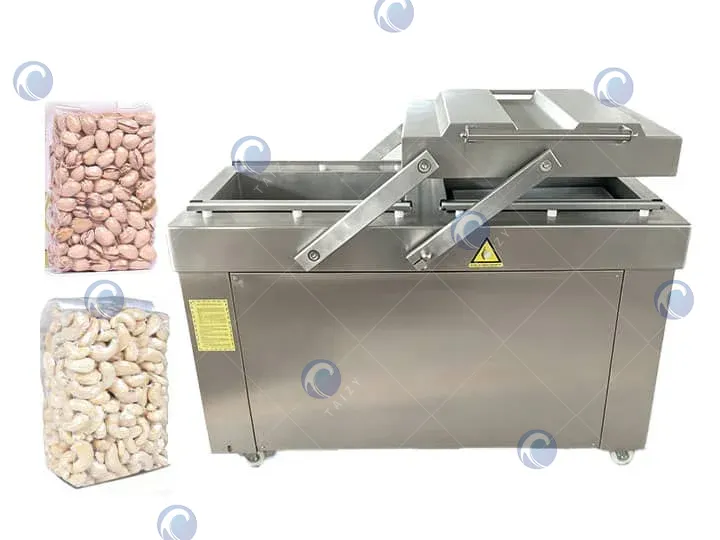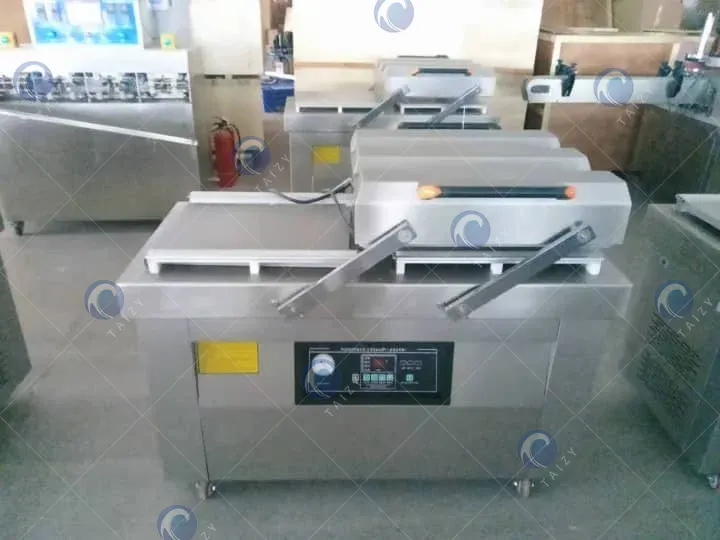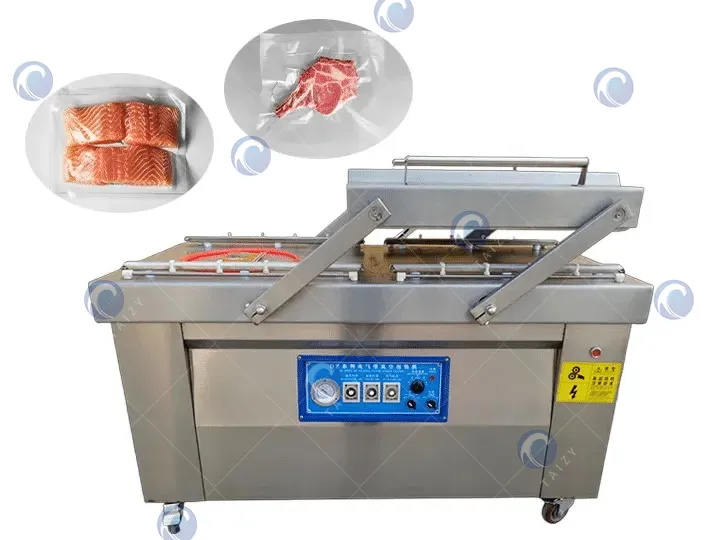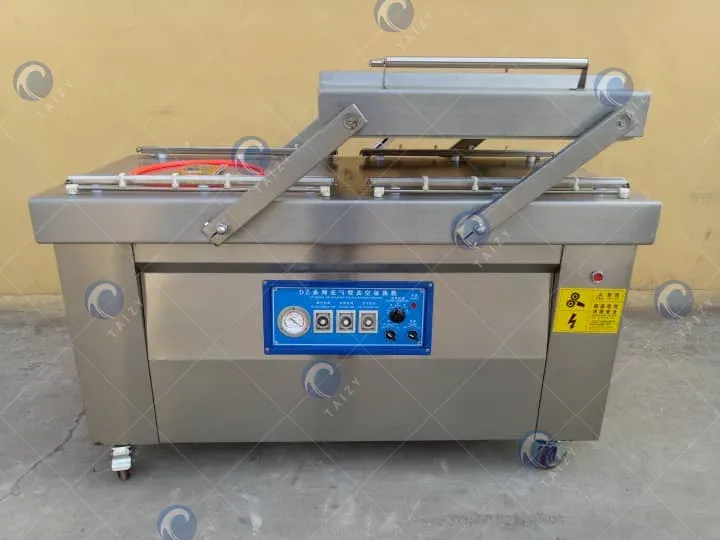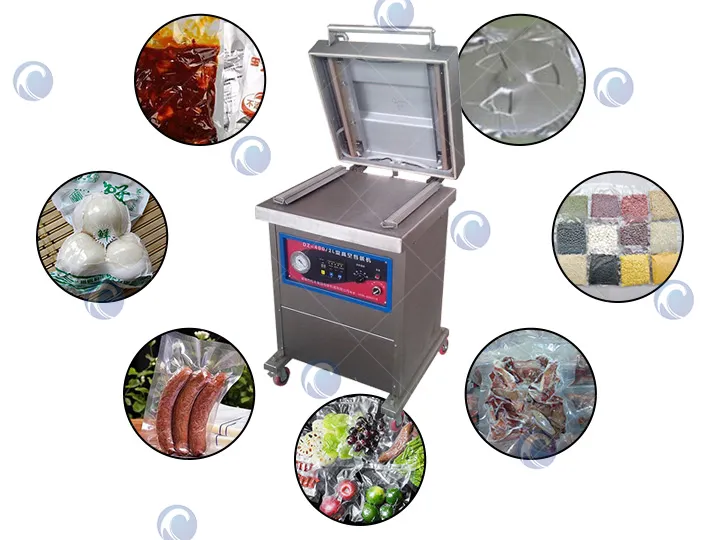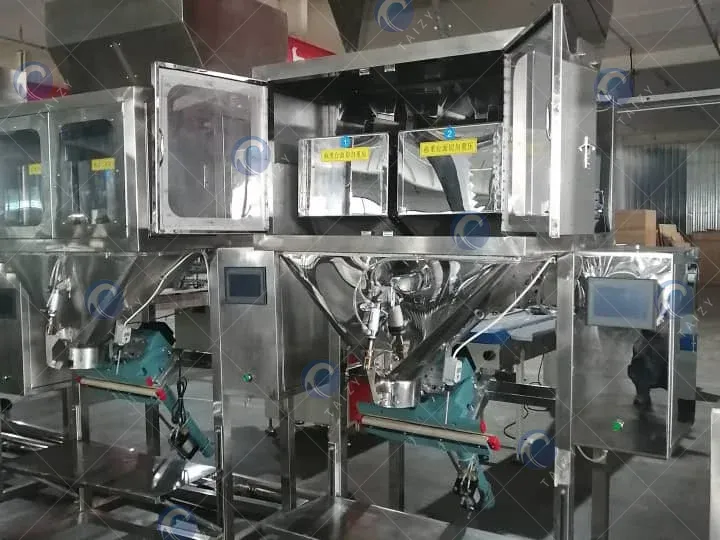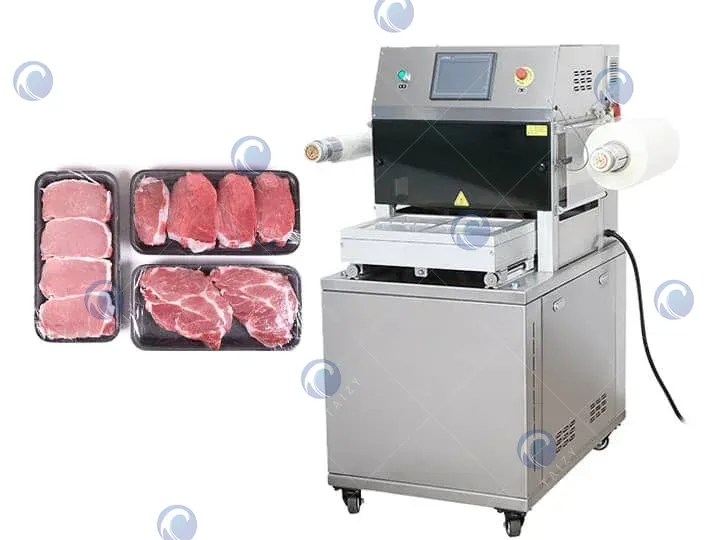
The modified atmosphere packaging machine (MAP machine) is an advanced food packaging system that extends shelf life by replacing the air inside a package with a controlled mixture of gases.
This technology uses gases such as carbon dioxide (CO₂), nitrogen (N₂), and oxygen (O₂) to create an optimal environment that slows down food spoilage without using preservatives.
Key Features of the MAP Packaging Machine
- Equipped with vacuuming and gas-filling capabilities, the modified atmosphere packaging machine significantly extends product shelf life.
- It features an automatic product counting function.
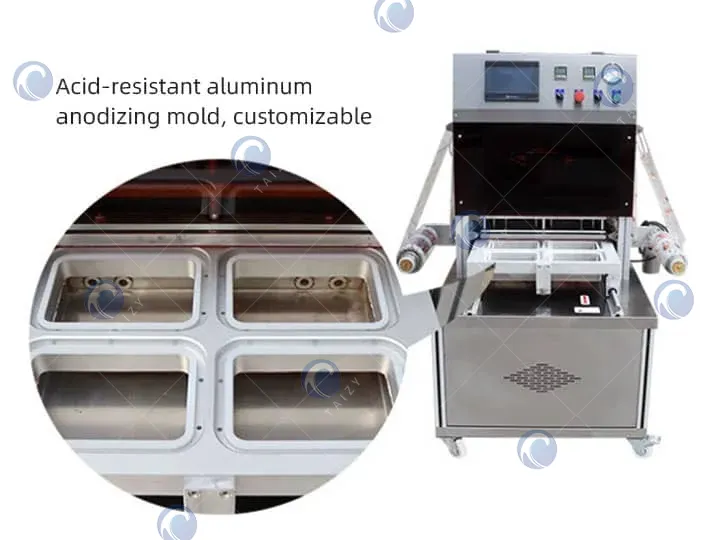
- Molds of the MAP machine can be flexibly customized to accommodate various tray dimensions.
- We utilize an air-expanding shaft system to facilitate easy film replacement.
- The entire machine features a 304 stainless steel body structure, ensuring robustness and durability.
- It features a dedicated anti-rat design to protect internal wiring.
- We installed a multi-stage damping system on it to ensure smooth and stable machine operation.
- Includes a one-touch reset and intelligent control system to facilitate seamless, continuous operation.
- Offers an optional preset system for gas mixing ratios, allowing for easy adjustment to suit different product requirements.
Detailed Parameters of MAP Tray Sealing Machine
| Model | JR-M330 | JR-M380 | JR-M410 | JR-M450 |
|---|---|---|---|---|
| Film width | 330mm | 380mm | 410mm | 450mm |
| Gas replacement rate | ≥99% | ≥99% | ≥99% | ≥99% |
| Mixing accuracy | ±2% | ±2% | ±2% | ±2% |
| Speed | 8–10s | 9–10s | 10s | 10s |
| Capacity | 300–500boxes/hour | 300–800boxes/hour | 300–800boxes/hour | 500–800boxes/hour |
| Voltage | 220/380V | 220/380V | 220/380V | 220/380V |
| Power | 2–5kW | 2.6–5kW | 3.5–5kW | 3.5–5kW |
| Air pressure | 0.6–0.8MPa | 0.6–0.8MPa | 0.6–0.8MPa | 0.6–0.8MPa |
What Is the Working Principle of a Modified Atmosphere Packaging Machine?
The Modified Atmosphere Packaging (MAP) process primarily involves the following three key steps:
Vacuum evacuation: The machine extracts the air from within the packaging container (tray or bag), thereby removing the oxygen that accelerates food spoilage.
Gas mixing and filling: A high-precision gas mixing unit injects a customized gas mixture into the package, comprising:
- CO₂ (Carbon Dioxide): Inhibits the growth of bacteria and mold.
- N₂ (Nitrogen): Prevents package collapse and retards oxidation reactions.
- O₂ (Oxygen): Preserves the food’s color (particularly in red meats).
Heat sealing: The packaging bag (or tray) is heat-sealed using a high-quality film, thereby creating a tightly protected internal environment with a slight positive pressure.
How Does a Modified Atmosphere Packaging Machine Preserve Food?
Modified Atmosphere Packaging technology extends the shelf life of food products by precisely controlling the gaseous composition within the package. Its preservation mechanism is primarily based on inhibiting microbial growth, controlling oxidation reactions, and regulating metabolic processes.
- Carbon dioxide can penetrate microbial cell membranes and interfere with enzymatic activity, and the high concentrations of CO₂ reduce the growth rate of aerobic bacteria and fungi. By leveraging this gaseous property, MAP machines achieve highly effective food preservation.
- MAP equipment reduces oxidation by lowering the oxygen concentration inside the package—specifically, by displacing oxygen with nitrogen (N₂), an inert gas.
- MAP slows down the respiration rate of fresh produce by reducing oxygen levels and simultaneously increasing carbon dioxide concentrations.
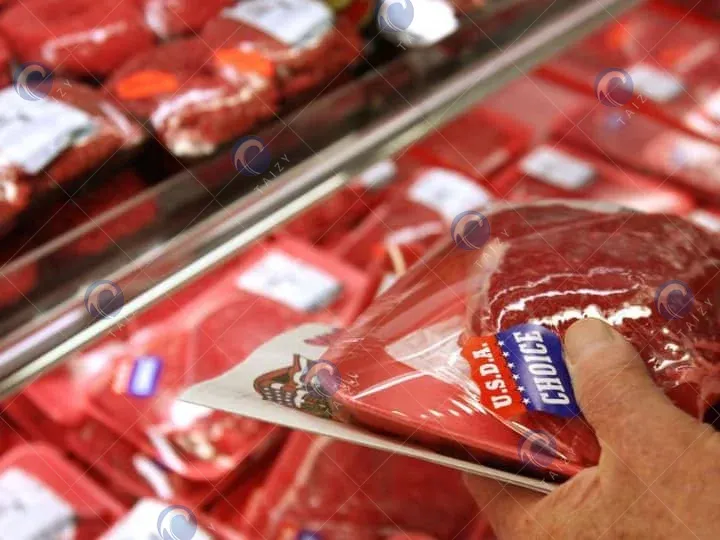
- For fresh meat, MAP employs high oxygen concentrations (e.g., approximately 70–80%) to maintain the meat’s vibrant red color (facilitating the formation of oxymyoglobin).
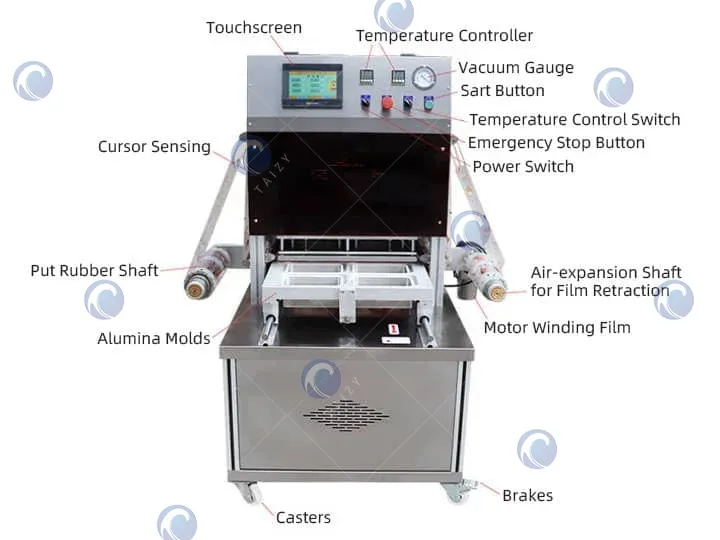
Key Components and Functions of Modified Atmosphere Packaging Machines
A modified atmosphere packaging machine consists of multiple precision components working in concert.
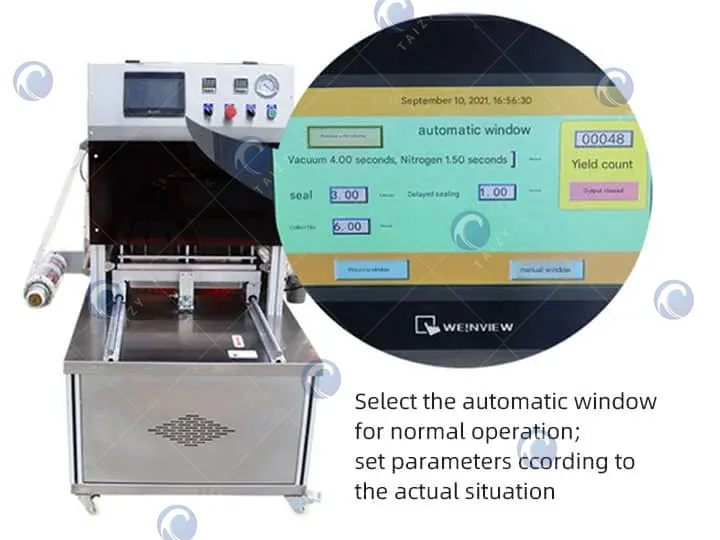
- The touchscreen control panel serves as the machine’s central control system, allowing operators to configure parameters such as vacuum duration, gas mixture ratios, and sealing time. It also facilitates rapid mold changes and one-touch operation.
- The temperature controller regulates the sealing temperature, preventing issues such as insufficient sealing (leaks) or excessive heat (film damage), thereby ensuring the airtightness of the seal and the overall integrity of the packaging.
- The vacuum gauge displays the vacuum level within the vacuum chamber in real-time, assisting in monitoring whether the air inside the chamber has been completely evacuated.
- Photoelectric sensors—also known as the film registration system—are responsible for detecting printed marks (color marks) on the packaging film, ensuring that the sealing position is precisely aligned with the printed pattern.
- The unwinding shaft functions to support and feed the packaging film into the machine, ensuring a smooth and uninterrupted film supply.
- The air-expanding shaft winding system enables the rapid loading and unloading of film rolls, making the film replacement process significantly faster and more convenient.
- The electric film rewinding unit automatically collects waste film (edge trim) and maintains appropriate tension during operation, ensuring precise film movement and neat, orderly rewinding.
- Additionally, the machine is equipped with universal casters featuring brakes to facilitate easy movement and handling.
Different MAP Gas Solutions for Food
Different food products require specific gas compositions to achieve optimal preservation results. The information provided below serves as a reference. If you have any other questions regarding food packaging, please feel free to contact us directly.
| Food type | O₂ (Oxygen) | CO₂ (Carbon dioxide) | N₂ (Nitrogen) | Temperature | Shelf life |
|---|---|---|---|---|---|
| Fresh meat | 80% | 20% | 0% | 0°C | 12–15days |
| Cooked food | 0% | 30% | 70% | 0°C | 3–7days |
| Fruits (Bayberry, lychee) | 3–5% | 3–5% | 90% | 0–5°C | 15–40days |
| Vegetables | Low O₂ | Moderate CO₂ | High N₂ | 0–6°C | 7–10days |
| Seafood | 0% | 20% | 80% | 0–6°C | 7–10days |
FAQ of Modified Atmosphere Packaging Equipment
What is MAP packaging used for?
It is used for preserving fresh food such as meat, seafood, fruits, vegetables, and ready meals.
Does MAP packaging use chemicals?
No. It uses natural gases (CO₂, N₂, O₂) without preservatives.
How long can food last with MAP?
Shelf life can be extended from a few days to several weeks, which depends on the product.
Is the modified atmosphere packaging machine customizable?
Yes. Tray size, mold design, and gas ratio can all be customized.
Modified Atmosphere Packaging (MAP) machines represent one of the most popular and efficient solutions in the modern field of food preservation.
By integrating vacuum technology, gas displacement, and precision sealing processes, this machine not only extends shelf life and enhances food quality but also creates aesthetically pleasing packaging that meets the highest standards of quality and presentation.
If you would like to receive the latest quote, contact us now!
Other types of vacuum machines: